
It is 7:30 AM, and you are standing in front of your closet holding a blazer and a chunky cardigan, wondering which top will actually look professional. Most blouses are designed to be seen, not hidden. When you layer a standard t-shirt or a thin silk camisole under a heavy knit, you often end up fighting with fabric that sticks, wrinkles, or bunches at the waist. The result is a silhouette that looks messy and unpolished, even if the outer layer is tailored.
This guide focuses on solving that specific problem. We are not looking for statement pieces; we are looking for functional base layers. You will learn how to select necklines that disappear under a V-neck sweater, how to choose fabrics that resist wrinkling in a heated office, and how to fit a blouse under a fitted blazer without creating a "double waist" effect. We will also examine specific product options that fit these criteria, helping you build a rotation of tops that work together regardless of the outer layer you choose for the day.
- Understanding the Mechanics of Office Layering
- Choosing the Right Neckline for Underneath
- Fabric Selection: Warmth, Weight, and Wrinkle Resistance
- Fit and Silhouette: Avoiding Bulk
- 7 Best Women's Blouses for Fall Office Layering
- Product Comparison Table
- Common Mistakes to Avoid When Layering
- Care and Styling Tips for Long-Lasting Wear
- Frequently asked questions
- Key takeaways
Understanding the Mechanics of Office Layering
Layering in a professional setting is not just about temperature regulation; it is about visual hierarchy. In a summer office, you might wear a single layer. In fall, you are stacking two or three layers. The base layer (the blouse) dictates how the outer layers sit. If the base layer is too thick, a fitted blazer will pull and gap at the shoulders. If it is too thin and slippery, it will shift and create visible lines under a sheer or thin knit.
The goal is "invisible" layering. The blouse should disappear behind the sweater or jacket, providing a smooth canvas. This requires attention to three specific mechanics: friction, weight, and volume.
Friction and Slippage
Think about how different fabrics interact. Silk and satin are low-friction materials. They slide easily. When you put a silk blouse under a wool cardigan, the silk tends to slip down or bunch up at the waist because it has no "grip." Conversely, cotton and thicker knits have higher friction. They stay in place. For office wear, you want a balance. You need enough friction to stay put, but not so much that it creates a bulky, lumpy appearance when compressed by a jacket.
Weight and Drape
Heavy fabrics add weight. A thick cotton poplin blouse under a heavy cashmere sweater creates a lot of mass at the torso. This can make you look heavier than you are. Lightweight fabrics like chiffon or thin jersey drape well but can wrinkle easily. The sweet spot for fall office layering is mid-weight fabric. It is substantial enough to hold its shape but light enough not to add significant bulk.
Volume Management
Every layer adds volume. A standard T-shirt is thin, but a flannel shirt is thick. A blouse with ruffles or peplums adds even more volume. When layering, you need to manage this accumulation. If your outer layer is fitted, your inner layer must be slim. If your outer layer is loose, you have more room to play with volume, but you still need to avoid excessive bunching at the waist.

Choosing the Right Neckline for Underneath
The neckline is the most critical factor in how a blouse looks under a sweater or jacket. A mismatched neckline can ruin an otherwise professional outfit. The rule of thumb is: the neckline of the inner layer should be higher than or equal to the neckline of the outer layer, unless you are intentionally showing it off.
Round and Crew Necks
Round necks are the most versatile for layering. They work under crew neck sweaters, V-necks, and turtlenecks. However, be careful with crew neck sweaters. If the sweater’s neckline is exactly the same height as the blouse’s neckline, you may see a "double ring" effect, which can look sloppy. To fix this, choose a blouse with a slightly higher neckline than the sweater, or pair a round-neck blouse with a V-neck sweater to create a clean vertical line.
V-Necks
V-necks are excellent for layering under V-neck sweaters or cardigans. They create a continuous line that elongates the body. If you are wearing a deep V-neck sweater, a blouse with a shallow V or even a round neck can work, as long as it doesn't dip too low and look accidental. A deep V-neck blouse under a shallow V-neck sweater will show too much skin and may not look professional in a conservative office.
Boat and Square Necks
Boat necks (wide, horizontal necklines) are tricky under necklines. They often peek out from under a crew neck or V-neck in a way that looks unintended. If you love boat necks, pair them with high-neck sweaters or turtlenecks where the blouse is completely hidden, or with open cardigans where the neckline is visible by design. Square necks are similar; they show a lot of collarbone. Use them as statement pieces in open layers, not as hidden base layers.
High Necks and Mock Necks
High necks are ideal for layering under open cardigans or blazers. They provide warmth and a clean line at the neck. If you are wearing a V-neck sweater, a high-neck blouse underneath can create a layered look that is both warm and stylish. Just ensure the high neck is not too tight, as it can dig into the neck when combined with a collar from a blazer or a tight sweater.

Fabric Selection: Warmth, Weight, and Wrinkle Resistance
Fabric determines how the blouse feels, how it moves, and how it holds up to a day in the office. You need to consider warmth, breathability, and maintenance.
Cotton and Cotton Blends
Cotton is a staple for office wear. It is breathable, durable, and generally easy to care for. For fall, look for cotton with a slight weight, such as poplin or broadcloth. These fabrics hold their shape well and do not cling. Cotton blends, such as cotton-polyester, offer the comfort of cotton with the wrinkle resistance of synthetic fibers. This is a practical choice for someone who does not have time to iron a blouse every morning.
Synthetic Fabrics (Polyester, Rayon, Viscose)
Synthetic fabrics are often used in affordable blouses because they are inexpensive to produce and easy to dye. Polyester is durable and resists wrinkles, making it a good option for travel. However, it can be less breathable than natural fibers, which might be an issue in a heated office. Rayon and viscose drape beautifully and feel soft against the skin. They are lighter than cotton and can be a good option for a smooth layer under a tight knit. The downside is that they are more prone to wrinkling and may require careful handling when washing.
Silk and Satin
Silk is luxurious but challenging for layering. It is slippery, which means it moves constantly. Under a knit sweater, a silk blouse can slide down or bunch up. It also wrinkles easily. If you choose silk for layering, look for a heavier silk or a silk-cotton blend. Alternatively, use silk as a visible layer under an open blazer or cardigan, rather than as a hidden base layer under a tight sweater.
Knit Blouses
Knit blouses, such as those made from cotton or wool blends, are inherently stretchy. This makes them less likely to wrinkle. However, they can add bulk. A thick knit blouse under a fitted blazer can make you look wider. If you choose a knit blouse for layering, opt for a fine gauge (thin) knit rather than a chunky one. Fine gauge knits drape well and add minimal bulk.
Fit and Silhouette: Avoiding Bulk
Fit is the difference between a polished look and a messy one. When layering, the blouse must fit well on its own, but it also needs to fit well *under* another garment.
Sizing Up vs. Sizing Down
A common mistake is sizing up to "make room" for a sweater. This is usually the wrong approach. If you size up, the blouse becomes too loose, and when you pull on a sweater, the excess fabric bunches at the waist and underarms. Instead, choose a blouse that fits your body well. It should be close to your body but not tight. When you put on a sweater, the sweater will compress the blouse slightly, smoothing out any minor wrinkles. If the blouse is too tight, the sweater will pull on it, creating tension lines.
Sleeve Length
Sleeve length is crucial for a clean look. If the blouse sleeve is longer than the sweater sleeve, it will peek out at the wrist. This can look intentional if the fabrics and colors match well, but it often looks accidental. For a safe, professional look, choose a blouse with sleeves that are the same length as or slightly shorter than the sweater sleeves. If you are wearing a long-sleeve sweater, a long-sleeve blouse is fine. If you are wearing a short-sleeve sweater or a sleeveless vest, a long-sleeve blouse will show at the wrist. Decide if you want that look. If not, choose a short-sleeve or cap-sleeve blouse.
Hemline Length
The hemline determines whether you need to tuck the blouse in. A standard blouse hem is usually just below the waist. If you plan to wear the blouse untucked under a cardigan, it needs to be long enough to stay down. A tunic-style blouse or a longer hemline is ideal for this. If you plan to tuck it in, a standard length is fine. However, if the blouse is very loose, it may puff out at the waist when tucked. In this case, a slimmer fit is better for a tucked look.
7 Best Women's Blouses for Fall Office Layering
The following products are selected based on their potential to function as versatile base layers. We have evaluated them based on their fabric composition, fit, neckline, and price point. Note that sizing can vary between brands, so always check the specific size chart for each item.
1. Hollowed-out Backless Beach Cover-up With Colorful Pom-poms And Tassels
This item is a unique piece that combines structural elements with decorative details. The hollowed-out back and pom-pom accents make it a statement piece rather than a traditional office blouse. However, its design features specific advantages for certain layering scenarios. The open back allows for breathability and reduces bulk in the upper back area, which can be helpful if you are wearing a tight-fitting cardigan. The pom-poms add texture, which can break up the smoothness of a plain sweater, creating a more interesting visual layer when the cardigan is open.
Hollowed-out Backless Beach Cover-up Best for Creative professionals who want a unique, textured layer under an open blazer or cardigan.
- Open back design reduces heat buildup and bulk in the upper back.
- Textural details add visual interest when layered with open garments.
- Not suitable for conservative offices or tight-fitting turtlenecks due to the open back and decorative elements.
2. Chic Women's Long Sleeve Spring Blouse Top
This blouse is described as chic and suitable for office wear or layering. Long sleeves make it a versatile option for fall, as it can be worn alone in mild weather or under a sweater in colder weather. The description emphasizes comfort and effortless style, suggesting a fabric that is soft and easy to move in. Without specific fabric details, it is likely a blend designed for daily wear. The long sleeve length ensures that it covers the arms completely, providing a clean line under a short-sleeve sweater or a sleeveless vest.
Chic Women's Long Sleeve Blouse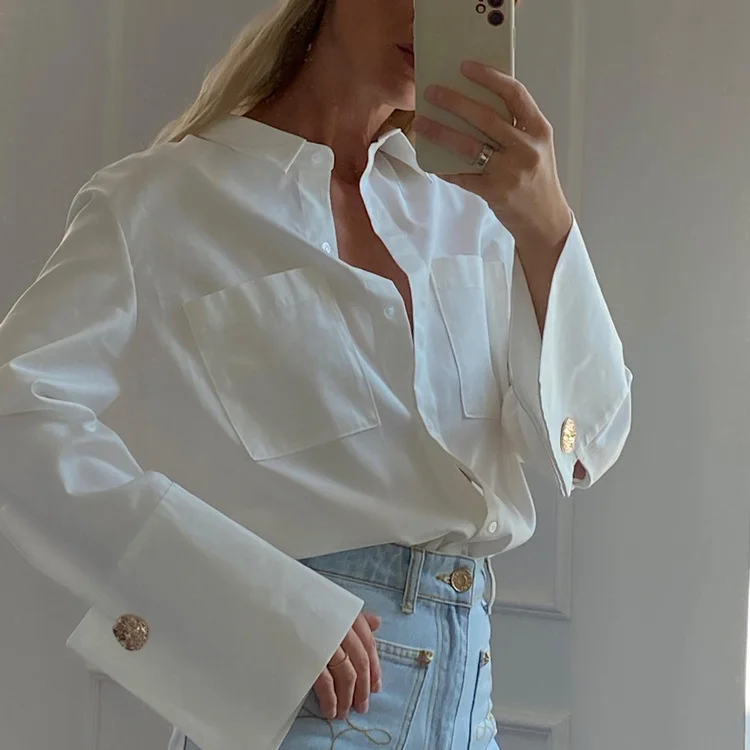
- Long sleeves provide full coverage and a clean line under various outer layers.
- Designed for comfort, making it suitable for all-day wear in a professional setting.
- Specific fabric composition is not listed, so check the label for care instructions and warmth level.
3. AutumnWinter V-Neck Loose 3D Knitted Sweater For Women
This item is a knit sweater with a V-neck and loose fit. While it is categorized as a blouse/shirt, it functions as a mid-layer or an outer layer in milder fall weather. The V-neckline is ideal for layering over a high-neck top or under a blazer. The loose fit means it will not add significant bulk to the torso, making it easier to layer under a fitted jacket. The "3D knitted" description suggests a textured fabric, which can add visual depth to an outfit without adding much weight.
V-Neck Loose 3D Knitted Sweater
- V-neckline allows for easy layering over high-neck bases or under open jackets.
- Loose fit minimizes bulk, making it easier to fit under a fitted blazer.
- As a knit, it may be less durable than woven fabrics and can pill over time.
4. Round Neck Sleeveless Casual Short-sleeved Vest T-shirt
This is a sleeveless vest-style top made from polyester with an "Ice Silk" anti-wrinkle finish. The sleeveless design makes it an excellent base layer for fall, as it can be worn under long-sleeve sweaters without adding bulk at the arms. The round neck is classic and works under most necklines. The polyester fabric is durable and resists wrinkles, which is helpful for a busy office day. The "Ice Silk" description suggests a smooth, cool-touch fabric, which may be less warm than cotton but is easy to care for.
Round Neck Sleeveless Vest T-shirt
- Sleeveless design eliminates arm bulk, allowing for a slimmer silhouette under outer layers.
- Polyester "Ice Silk" fabric is anti-wrinkle and durable, reducing maintenance time.
- Synthetic fabric may be less breathable than natural fibers, potentially feeling warm in heated offices.