

It is 55 degrees outside, and you are staring at your closet, unsure what to wear. You don’t want to be freezing, but you also don’t want to look like you are wearing a winter coat in September. The solution is not just "more clothes." It is about how those clothes interact. Many women struggle with layering because they add bulk where they need airflow, or they ignore how fabrics feel against each other. This guide gives you three distinct ways to layer blouses so you stay warm, look polished, and actually enjoy your outfit. You will learn which fabrics work best together, how to coordinate colors without overthinking it, and which specific pieces from our current selection solve common styling problems.
- Building the Foundation: Choosing the Right Base Blouse
- Method 1: The Classic Tuck (Blouse Under Knitwear)
- Method 2: The Open Cardigan (Blouse as Mid-Layer)
- Method 3: The Textured Contrast (Blouse Under Structured Outerwear)
- Product Comparison: Our Recommended Pieces
- Common Mistakes to Avoid When Layering
- Care and Styling Tips for Longevity
- Frequently asked questions
- Key takeaways
Building the Foundation: Choosing the Right Base Blouse
Before you buy a sweater or a jacket, you need the right base. The base layer determines how the entire outfit hangs and how warm you actually feel. If your base is too thick, the outer layers will pull and wrinkle. If it is too thin, you will still be cold once you step outside. For fall, you want fabrics that balance breathability with enough weight to provide a slight barrier against the wind.
Why Fabric Weight Matters More Than Color
Cotton is the most versatile base fabric for fall. It is breathable, so it doesn't trap sweat when you move from a cool car into a warm office. However, standard t-shirt cotton is too thin for 50-degree weather. Look for "heavyweight cotton" or "oxford weave." These fabrics have more density, which means they hold their shape better when you tuck them in. They also resist wrinkling better than lightweight poplin, which is crucial if you plan to wear the blouse for a full workday.
Silk and satin are excellent for a polished look, but they require a different approach. They are slippery, which means they can slide out of sweaters or jackets. They are also cold to the touch. If you choose a silk base, you must pair it with a mid-layer that has enough friction to hold it in place, such as a ribbed knit. If you are new to layering, start with cotton. It is forgiving, easy to care for, and works with almost every other fabric you will own.
The Fit Rule: Slim, Not Tight
A common mistake is choosing a blouse that is "true to size" for your body. For layering, you need a blouse that is slim but not tight. When you pull a cardigan or sweater over it, the fabric of the blouse gets compressed. If the blouse is already tight, it will create horizontal wrinkles across your chest and stomach, adding visual bulk. You want a fit that skims your body. Check the shoulder seams; they should end exactly where your arm meets your shoulder. If they slide down, the blouse is too big, and the extra fabric will bunch up at the waist when you tuck it in. If they dig in, it is too small, and the outer layer will pull it outward, creating an unflattering shape.
Neckline Choices for Layering
Your neckline changes the vibe of the layered look. A crew neck is the most versatile. It works under almost any sweater or cardigan without creating gaps. A V-neck is great for adding some depth to the outfit, especially if you are wearing a necklace. However, if you are layering a V-neck under a thick turtleneck, the V will be hidden, so it serves no purpose. For a more relaxed look, a button-down collar can be worn open or closed. If you plan to wear the blouse under a jacket, a mandarin collar or a high neck can add structure and warmth without the bulk of a traditional collar.

Method 1: The Classic Tuck (Blouse Under Knitwear)
This is the workhorse layering technique. It is the most structured look and the easiest to get right. The goal here is to create a clean horizontal line at your waist where the blouse meets the sweater. This defines your silhouette and prevents the outfit from looking like a shapeless blob.
How to Execute the Clean Tuck
Start by buttoning your blouse all the way up. Then, tuck the front of the blouse into your pants or skirt. Do not tuck the back. This is called the "French tuck" or "partial tuck." By leaving the back loose, you allow the blouse to fall naturally over your lower back. This prevents the fabric from pulling tight when you sit down. If you tuck the entire blouse in, it will ride up when you sit, and it will feel constricting. The partial tuck gives you the structure of a tucked look with the comfort of an untucked one.
When you pull the sweater over the blouse, the sweater should cover the top of the blouse but not necessarily the entire torso. If the sweater is long (hip-length or longer), the partial tuck is essential. If the sweater is cropped, you can tuck in the entire blouse if you prefer a fully defined waist. The key is to ensure that the fabric of the blouse is smooth against your skin. If you feel wrinkles or bunching at the waistband, adjust the tuck before you put on the sweater. Once the sweater is on, it is harder to fix the fabric underneath.
Choosing the Right Sweater Weight
For this method, you need a knit that is not too thick. A chunky cable knit can be too heavy for a thin blouse, creating a massive bulk at the shoulders. Look for a mid-weight knit. A standard cotton or wool blend works well. The knit should have enough drape to fall smoothly over the blouse, but enough structure to hold its shape. If the sweater is too slouchy, it will swallow the blouse. If it is too stiff, it will push the blouse outward. A relaxed fit sweater is ideal because it allows the blouse to breathe and move underneath.
For this specific method, a striped woven sweater offers a nice textural contrast to a solid blouse. The stripes add visual interest without being too loud. Women's Cardigan Striped Button Stitching Woven Sweater
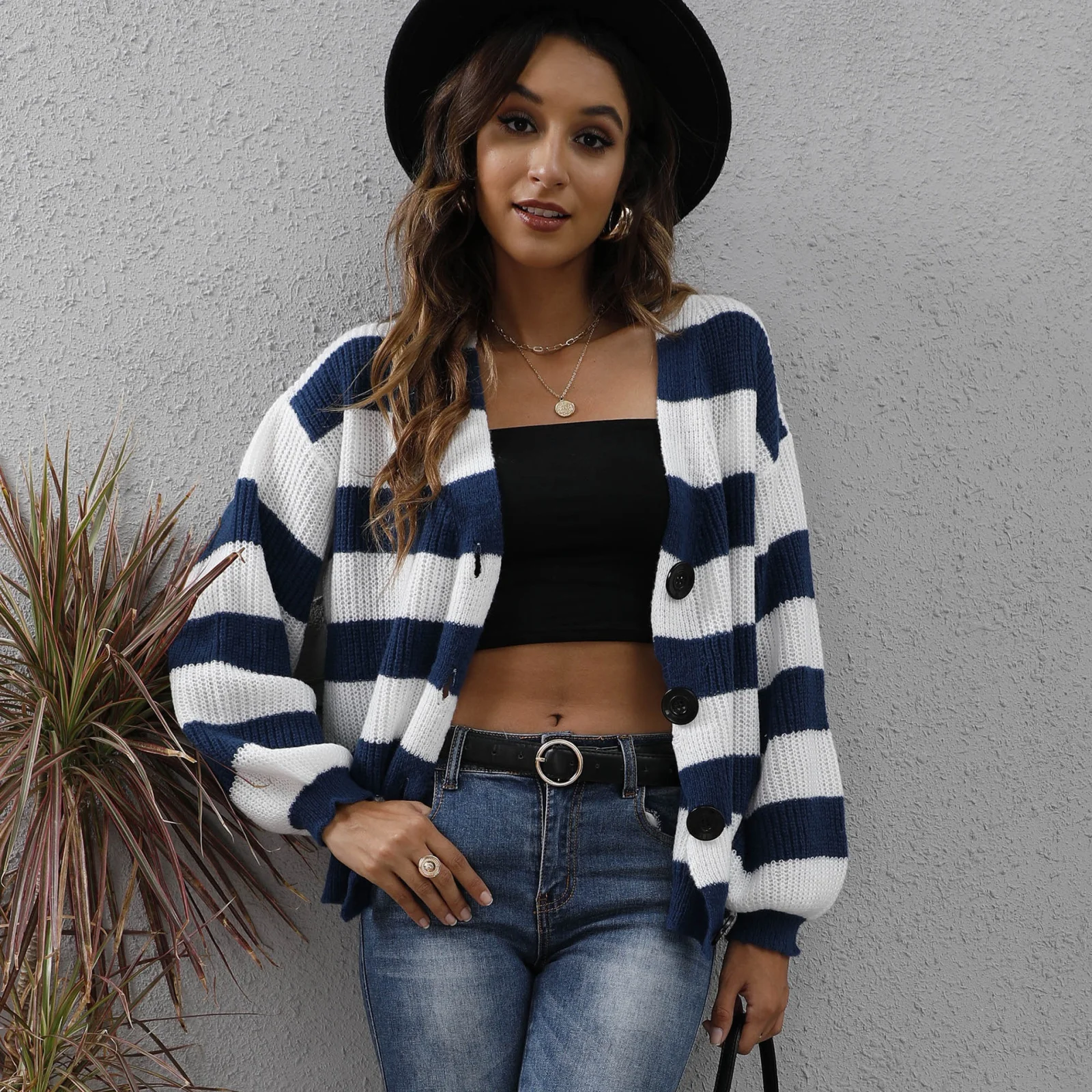
- The striped pattern adds visual height and interest to a simple solid blouse underneath.
- The button stitching detail provides a structured look that holds its shape well over a tucked blouse.
- Check the fit carefully, as woven sweaters can be less forgiving with sizing than knits.
Method 2: The Open Cardigan (Blouse as Mid-Layer)
In this method, the blouse is the star. You wear the blouse as the second layer, with a cardigan open over it. This is the most versatile layering technique because you can easily adjust your warmth. If you get hot, you can unbutton the cardigan. If you get cold, you can button it. This method works best when the blouse has some personality, such as a pattern, a unique neckline, or a distinct texture.
Why the Blouse Should Be Visible
When wearing an open cardigan, the blouse is the focal point. The cardigan acts as a frame. You want the blouse to look intentional, not accidental. This means the blouse should be well-fitted and clean. If the blouse is wrinkled or the buttons are mismatched, it will stand out in a bad way. A blouse with a subtle pattern, like a small floral or a geometric print, works well here because it adds color and interest without being overwhelming. Solid colors are also fine, especially if you are wearing a colorful cardigan.
Pay attention to the length of the cardigan. If the cardigan is long (thigh-length), the blouse should be tucked in to define your waist. If the cardigan is short (waist-length), you can leave the blouse untucked for a more relaxed look. The goal is to create a balanced proportion. If you have a long cardigan and an untucked blouse, you may look like you are wearing two dresses. If you have a short cardigan and a tucked blouse, you may look top-heavy. Experiment with both to see what works with your body type.
Color Coordination for the Mid-Layer
When the blouse is the mid-layer, color coordination becomes more important. The blouse, cardigan, and pants/skirt all need to work together. A simple rule is to keep the bottom neutral. If your blouse is patterned, wear solid black, navy, or beige pants. This grounds the outfit. If your blouse is solid, you can add a patterned cardigan or pants. Avoid wearing a patterned blouse with a patterned cardigan unless the patterns are very small and the colors are complementary. It is easier to make a mistake with two large patterns than with one large and one small.
A loose-fit lace shirt with patchwork details offers a unique texture that stands out well under an open cardigan. The lace adds a feminine touch, while the patchwork adds a modern, edgy feel. Loose-fit Lace Epaulette Patchwork Shirt Jacket Top

- The loose fit allows for easy layering under cardigans without feeling restrictive.
- The lace and patchwork details provide visual interest that shines through an open cardigan.
- Lace can be delicate, so check the fabric quality to ensure it holds up with frequent wear.
Method 3: The Textured Contrast (Blouse Under Structured Outerwear)
This method is for colder days. You wear the blouse as the base, a lightweight knit or sweater as the mid-layer, and a structured jacket or coat as the outer layer. The key here is contrast. You want the softness of the blouse and knit to contrast with the rigidity of the jacket. If all your layers are soft, the outfit can look slouchy. If all your layers are stiff, it can look like a uniform. Mixing textures adds depth and interest.
Getting the Proportions Right
When adding a structured jacket, you need to be careful about bulk. A thick jacket over a thick sweater over a thick blouse will make you look like a brick. To avoid this, keep the inner layers slim. A thin cotton blouse and a lightweight knit sweater are ideal. The jacket should fit well over these layers. It should not be tight, but it should not be baggy. You want to be able to move your arms comfortably. If the jacket is too tight, it will pull at the shoulders and create wrinkles in the inner layers. If it is too loose, it will swallow your silhouette.
Pay attention to the length of the jacket. A short jacket (waist-length) works well with high-waisted pants or a skirt. It creates a clean break at the waist. A long jacket (thigh-length or longer) works well with slim-fitting pants. It creates a long, vertical line. Avoid wearing a long jacket with wide-leg pants unless you are very tall. The combination can shorten your legs and make you look smaller.
Choosing the Right Jacket
For fall, a trench coat, a blazer, or a leather jacket are all good options. A trench coat is classic and works with almost any blouse. A blazer is more formal and works well for office settings. A leather jacket is edgy and works well for casual settings. Choose a jacket that you already own or that you know you will wear often. You don't need to buy a new jacket for this method. You just need to make sure it is clean and in good condition. A wrinkled or stained jacket will ruin the look, no matter how nice the blouse and sweater are.
A chunky-knit cotton top provides the perfect mid-layer for this method. It is thick enough to provide warmth but lightweight enough to fit under a jacket without adding too much bulk. The round neck is versatile and works with both high and low neck blouses underneath. Round-neck Chunky-knit Cotton Fabric Top
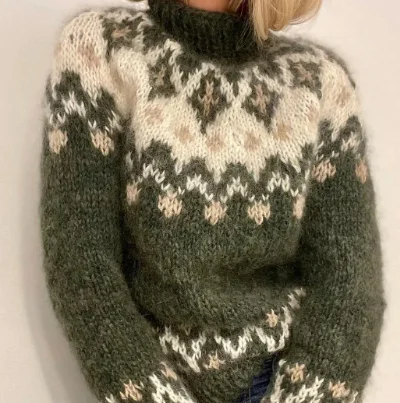
- The chunky knit adds visual warmth and texture that contrasts well with smooth blouses.
- Available in a wide range of sizes (XS to 5XL), making it easier to find a fit that works for layering.
- Check the material composition, as the listing specifies polyester, which may feel different from natural cotton.
Product Comparison: Our Recommended Pieces
Not all blouses and sweaters are created equal for layering. Some are designed to be worn alone, while others are built for layering. Here is a comparison of the products we recommend, based on their specific features and how they fit into the three layering methods described above.
| Product | Price | Type/Material | Key Features | Best For |
|---|---|---|---|---|
| Cardigan Striped Button Stitching Woven Sweater | $27.88 | Woven Sweater (Category: Blouses & Shirts) | Striped pattern, button stitching, woven texture | Classic tuck method; office-appropriate layering |
| Chinese-style Corn-stitch Cotton Knit Cardigan | $21.88 | Cotton Knit (Category: Sweaters) | Corn-stitch detail, 3D embellishment, one size fits all, Asian sizing | Open cardigan method; adding ethnic or artistic flair |
| Retro Cotton-Linen Shirt Artistic Cardigan | $20.12 | Cotton-Linen (Category: Blouses & Shirts) | Cotton-linen blend, artistic embroidery, retro style | Base layer or mid-layer; breathable, casual fall look |
| Round-neck Chunky-knit Cotton Fabric Top | $23.96 | Polyester (Category: Sweaters) | Chunky knit, round neck, wide size range (XXS-6XL) | Textured contrast method; warm mid-layer under jackets |
| Three-dimensional Flower Knitted Cardigan | $15.44 | Polyester (Category: Sweaters) | 3D flower embellishment, loose fit, red/pink options | Statement mid-layer; adding color and texture |
| Loose-fit Lace Epaulette Patchwork Shirt | $42.00 | Lace/Patchwork (Category: Blouses & Shirts) | Lace detail, epaulettes, patchwork design, loose fit | Open cardigan method; statement piece under open layers |
Notice the variety in materials. You have woven, knitted, cotton-linen, and lace options. This variety is important because different fabrics layer differently. A woven sweater is stiffer than a knitted one. A cotton-linen shirt is more breathable than a polyester top. When building your wardrobe, try to have a mix of these fabrics so you can adapt to different temperatures and styles.
A cotton-linen shirt with artistic embroidery offers a great base layer option. The cotton-linen blend is breathable, which is ideal for fall. The artistic embroidery adds a retro touch that can be seen when the cardigan is open. Retro Cotton-Linen Shirt Womens Artistic Cardigan Embroidered Blouse

- The cotton-linen blend is ideal for fall weather, providing breathability without being too thin.
- The artistic embroidery adds a unique detail that stands out under an open cardigan.
- Linens can wrinkle easily, so check the care instructions to ensure it holds up with daily wear.
A Chinese-style corn-stitch cotton knit cardigan offers a unique pattern and texture. The corn-stitch detail adds a visual interest that is different from standard knits. The 3D embellishment adds a tactile element that can be felt as well as seen. Chinese-style Corn-stitch Cotton Knit Cardigan Sweater for Women
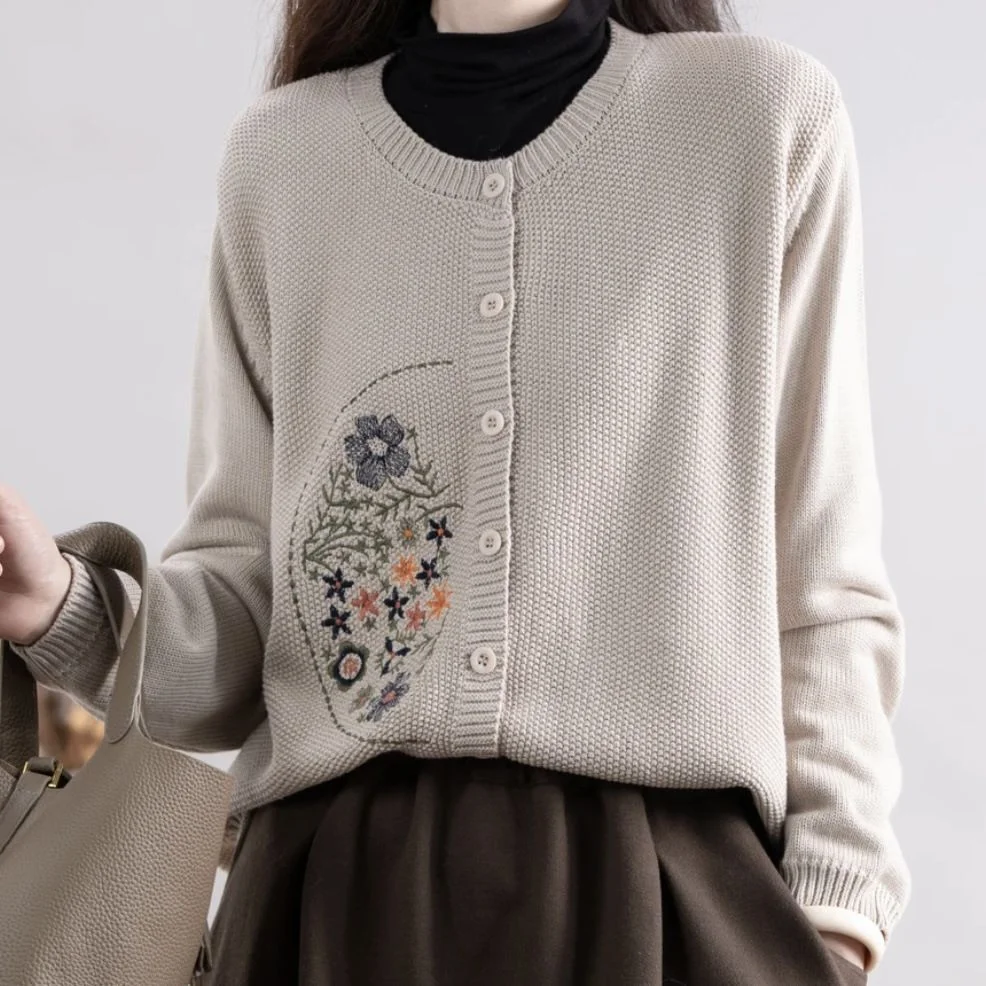
- The cornShop the storyAll products from this guide


