
Your blazer is a $200 investment that looks sharp only if the shirt underneath stays smooth. Many office workers struggle with blouses that bunch at the wrists, pull at the collar, or make them sweat by noon. This guide solves that by focusing on the specific mechanical interactions between a blouse and a structured jacket. You will learn how to judge fabric weight, choose the right neckline for visibility, and adjust sizing to eliminate excess fabric. We will also review five specific options that balance cost, comfort, and professional appearance.
Understanding Fabric Weight for Layering
The most common reason layering fails is fabric bulk. When you put a thick shirt under a blazer, the layers do not compress well. This creates visible lumps at the shoulders and armpits. For office wear, you need a fabric that is substantial enough to look professional but thin enough to slide smoothly under a jacket sleeve.
Why weight matters more than material name
People often ask if silk or cotton is better. The material name is less important than the weight per square inch. A heavy cotton oxford shirt looks stiff under a blazer. A lightweight cotton sateen or a synthetic blend with a smooth finish drapes better. You want a fabric that falls away from the body rather than clinging or holding its shape too rigidly.
Check the fabric description for terms like "drapey," "lightweight," or "soft." If the shirt is described as "structured" or "stiff," it is likely too heavy for layering under a fitted blazer. A good layering shirt should feel similar to a dress shirt but with more give. This allows it to move with your body when you reach for a keyboard or lean over a desk.
Breathability and temperature control
Office buildings are often over-air-conditioned in the morning but can feel warm by the afternoon. If your blouse is too warm, you will either unbutton the blazer constantly or feel uncomfortable. Breathable fabrics allow air to circulate. Look for natural fibers or blends that wick moisture. A synthetic shirt that traps heat will make you feel clammy, which is a professional hazard if you have meetings.
Wrinkle resistance is also a critical factor. Cotton wrinkles easily when compressed under a jacket. Synthetic fabrics or blends with wrinkle-resistant properties maintain a polished look throughout the day. You do not want to walk into a meeting with creases across the chest from sitting at your desk.
Neckline Visibility Under a Blazer
Your blazer has a specific opening. Most lapels sit about two to three inches from the collarbone. Your blouse neckline needs to fill this space without disappearing or pulling tight. If the neckline is too high, it gets hidden and looks sloppy. If it is too low, it may gape when you move.
The V-neck advantage
A standard V-neck is the most reliable shape for layering. It creates a clean vertical line that elongates the torso. The depth of the V should reach the top button of the blazer. This ensures that when the blazer is buttoned, the blouse is visible but not excessive. A deep V-neck can look unprofessional in conservative offices, while a shallow V-neck may get swallowed by the lapel.
For the New Korean-style Slim Waist V-neck Long Sleeve Shirt, the V-neck design is a key feature for this purpose.

- Provides a clean vertical line that elongates the frame.
- Slim waist cut reduces bulk under a jacket.
- Check specific sizing charts as "Korean-style" often runs smaller than US standards.
Scalloped and curved necklines
A scalloped or gently curved neckline adds a feminine touch without adding bulk. This shape sits lower than a crew neck but higher than a deep V. It is forgiving because it does not have a sharp point that can pull. If you have a blazer with a wide lapel, a curved neckline ensures that fabric is visible even when the jacket is slightly open.
Avoid high crew necks unless you plan to leave the blazer unbuttoned. Under a buttoned blazer, a crew neck can look like a turtleneck is struggling to get out. It can also create pressure at the neck if the blazer collar is stiff. A scoop neck is a safe middle ground that works with most blazer styles.
Sleeve Length and Wrist Fit
Sleeve bunching is the number one complaint for women layering under blazers. When your arm is straight, the blouse sleeve should end at the base of your thumb. When you bend your arm to type, the sleeve will pull back slightly. If the blouse sleeve is too long, it gathers into a fist at the wrist. This looks messy and can actually catch on the blazer cuff, causing friction and wear.
Measuring for the right length
Stand in front of a mirror with your arms at your sides. The hem of the blouse sleeve should hit the wrist bone. If it hits the middle of your palm, it is too long. You can often hem store-bought blouses, but when buying online, you must rely on the size chart. Look for the "sleeve length" measurement, not just the chest size. A sleeve that is an inch too long is better than one that is half an inch too short, as it is easier to push up slightly than to have it ride up constantly.
For the Tie Belt Puff Sleeve Top - Ruffled Blouse, the sleeve design requires careful consideration.
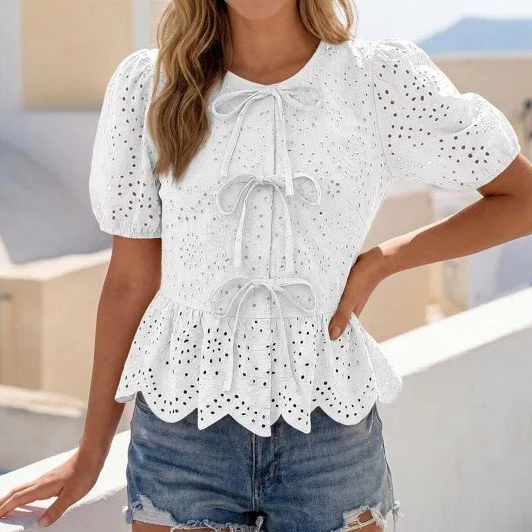
- Adds a feminine detail that stands out from standard office wear.
- Available in multiple colors including black and white for versatility.
- Puff sleeves add volume at the shoulder, which may not fit under a tight blazer; check the shoulder width measurement.
Managing excess fabric
If you have larger hands or broader wrists, standard sizing may not work. You need a blouse with a slightly looser sleeve opening or a fabric that drapes rather than clings. A stiff fabric will hold the bunched fabric in place, making the mess more obvious. A soft, drapey fabric allows the excess to fall smoothly. You can also try pushing the blouse sleeve up slightly to create a clean break at the wrist, but this requires the fabric to be light enough to hold that shape.
How to Choose the Right Fit
Fit is more important than style when layering. A beautiful blouse that is too big will look like a tent under a blazer. A blouse that is too tight will pull at the buttons and create horizontal lines across your torso. The goal is a "relaxed slim" fit. The blouse should skim your body, not hug it, and not hang loose.
Chest and waist measurements
Measure your chest at the fullest part. Add two to three inches for a comfortable layering fit. This extra space allows for movement and prevents the blouse from pulling when you reach forward. Measure your waist where you naturally cinch. If the blouse has a defined waist, it should be no tighter than your actual waist measurement. If it is a straight cut, ensure it does not create a triangular shape under the blazer.
For the Professional Drape Commuter Shirt – Wrinkle-Resistant Workwear, the "comfortable fit" description suggests a standard cut.
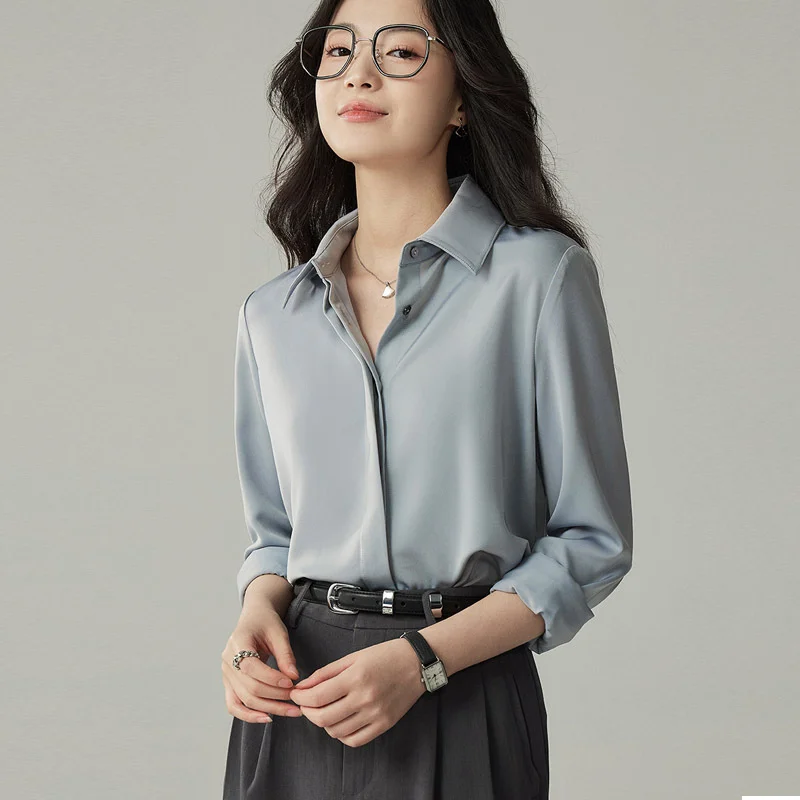
- Wrinkle-resistant fabric maintains a professional appearance all day.
- Polished silhouette suitable for meetings and interviews.
- Check the specific fabric composition to ensure it meets your breathability needs, as "wrinkle-resistant" often implies synthetic blends.
Shoulder and armhole fit
The shoulder seam should sit exactly on the edge of your shoulder bone. If it falls off the shoulder, the blouse will slide down when you put on your blazer. If it is too tight, it will pull the blazer off your shoulders. The armhole should be large enough to allow you to raise your arms without the blouse riding up under your armpit. This is a common issue with fitted blouses. If you experience this, size up in the chest and consider having the sides taken in by a tailor.
For the All-matching Slim Fit Short Chic Temperament Shirt, the "slim fit" description indicates a tighter cut.

- Minimal bulk ensures a smooth line under a structured jacket.
- Slim fit reduces the risk of excess fabric bunching.
- May be too tight for layering over a heavy sweater or for those with broader shoulders; measure carefully.
Asian sizing considerations
Many affordable blouses are manufactured in Asia and labeled with Asian sizing. An Asian "Medium" is often equivalent to a US "Small" or "X-Small." Always check the measurement chart in inches or centimeters. Do not rely on the letter size. If you are between sizes, size up. It is easier to let out a hem or take in a waist than to buy a blouse that is too small. For the Casual Plaid Shirt for Women, the product description explicitly warns that Asian sizes are smaller.

- Loose fit provides comfort and ease of movement.
- 100% polyester fabric is easy to care for and resistant to wrinkles.
- Runs small; you must choose the larger size if you are between sizes to avoid a tight fit.
Product Comparison and Reviews
Below is a comparison of the five blouses available. Note that specific fabric compositions and exact measurements vary by size. Always check the individual product page for the detailed size chart before purchasing.
| Product | Price | Key Feature | Options | Best For |
|---|---|---|---|---|
| Professional Drape Commuter Shirt | $27.88 | Wrinkle-resistant, breathable | Check product page | Daily professional office wear |
| Tie Belt Puff Sleeve Top | $19.44 | Ruffled, tie belt, puff sleeves | Black, Green, Pink, White (S-XL) | Casual or creative office settings |
| New Korean-style Slim Waist V-neck | $23.88 | V-neck, slim waist | Check product page | Modern, slim silhouette layering |
| All-matching Slim Fit Short Chic | $18.8 | Slim fit, chic design | Check product page | Minimal bulk under tight blazers |
| Big U-neck Bottoming Shirt | $9.48 | U-neck, brushed inner | Check product page | Warmth and value on a budget |
| Casual Plaid Shirt | $26.68 | Loose fit, 100% polyester | Red, Pink (S-XXL) | Casual Fridays and street fashion |
For the Big U-neck Bottoming Shirt Brushed Inner Wear T-shirt, the price point makes it an excellent option for testing layering preferences.

- Very affordable price point allows for easy experimentation with fit.
- Brushed inner material suggests added warmth for cooler days.
- Basic design may lack the polish of a traditional blouse; best for casual or relaxed professional settings.
Common Mistakes to Avoid
Even with the right blouse, incorrect layering techniques can ruin the look. Here are the most common errors and how to fix them.
Ignoring the blazer fit
If your blazer is already tight across the chest, you cannot layer a thick blouse. The blazer should have enough room to accommodate a medium-weight shirt. If the blazer buttons strain when you button the shirt underneath, the blazer is too small. You need a blazer with a slightly relaxed fit or a blouse with a very slim cut. Do not force a tight blazer over a bulky shirt; it will distort the shape of both garments.
Choosing the wrong neckline depth
Many women buy a blouse with a high neckline because it looks modest on its own. Under a blazer, this neckline disappears, and the collar of the blouse may peek out awkwardly. Always visualize the blouse under the jacket. If you are unsure, choose a V-neck or a scoop neck that is at least two inches deep. This ensures that the blouse is visible and frames your face without creating a cluttered look at the neck.
Neglecting fabric care
Some fabrics shrink in the dryer. If you buy a slim-fit blouse and it shrinks, it will become too tight to layer comfortably. Check the care label. If it says "cold wash, hang dry," follow it strictly. Heat can also damage synthetic fibers, making them shiny and less breathable. Proper care extends the life of the blouse and maintains its fit.
Forgetting about movement
You do not just sit at a desk. You walk, type, reach, and lean. A blouse that looks good in the mirror may not work in motion. Test the fit by raising your arms, leaning forward, and turning your torso. If the blouse pulls, gaps, or bunches, it is not the right fit for active workdays. You want a blouse that moves with you, not against you.
Care and Styling Tips
Proper care and styling ensure your blouses look professional for years. Here are some practical tips to maintain your layering wardrobe.
Washing and drying
Wash blouses in cold water to prevent shrinking and color fading. Use a gentle cycle to reduce wear on the fabric. Avoid using the dryer if possible, as heat can damage delicate fabrics and cause shrinking. If you must use a dryer, use the lowest heat setting and remove the blouse while it is still slightly damp. Finish drying it on a hanger to maintain its shape. Iron or steam the blouse while it is slightly damp for the best results. This removes wrinkles without scorching the fabric.
Styling for different blazer styles
If you have a structured blazer with sharp shoulders, choose a blouse with a smooth, minimal design. Avoid ruffles or heavy textures that add bulk. If you have a softer, unstructured blazer, you can experiment with more decorative blouses, such as the Tie Belt Puff Sleeve Top. The key is balance. If the blazer is detailed, the blouse should be simple. If the blouse is detailed, the blazer should be plain. This creates a cohesive, professional look.
Color coordination
Neutral colors are the most versatile for layering. White, black, grey, and navy go with almost any blazer. If you want to add color, choose blouses in shades that complement your blazer. For example, a light blue blouse looks sharp under a navy blazer. A cream blouse adds warmth to a black blazer. Avoid clashing patterns. If your blazer is plaid, wear a solid blouse. If your blouse is patterned, wear a solid blazer. This keeps the look clean and professional.
Seasonal adjustments
In early fall, a lightweight blouse is sufficient.